Knee pain when climbing stairs: common causes and when to see a specialist
Pain at the front of the knee on stairs is one of the most common reasons adults see an orthopaedic specialist. Here is what usually causes it and what helps.
- Written by
- Livewell specialist (placeholder)
- Published
- Reading time
- 2 min
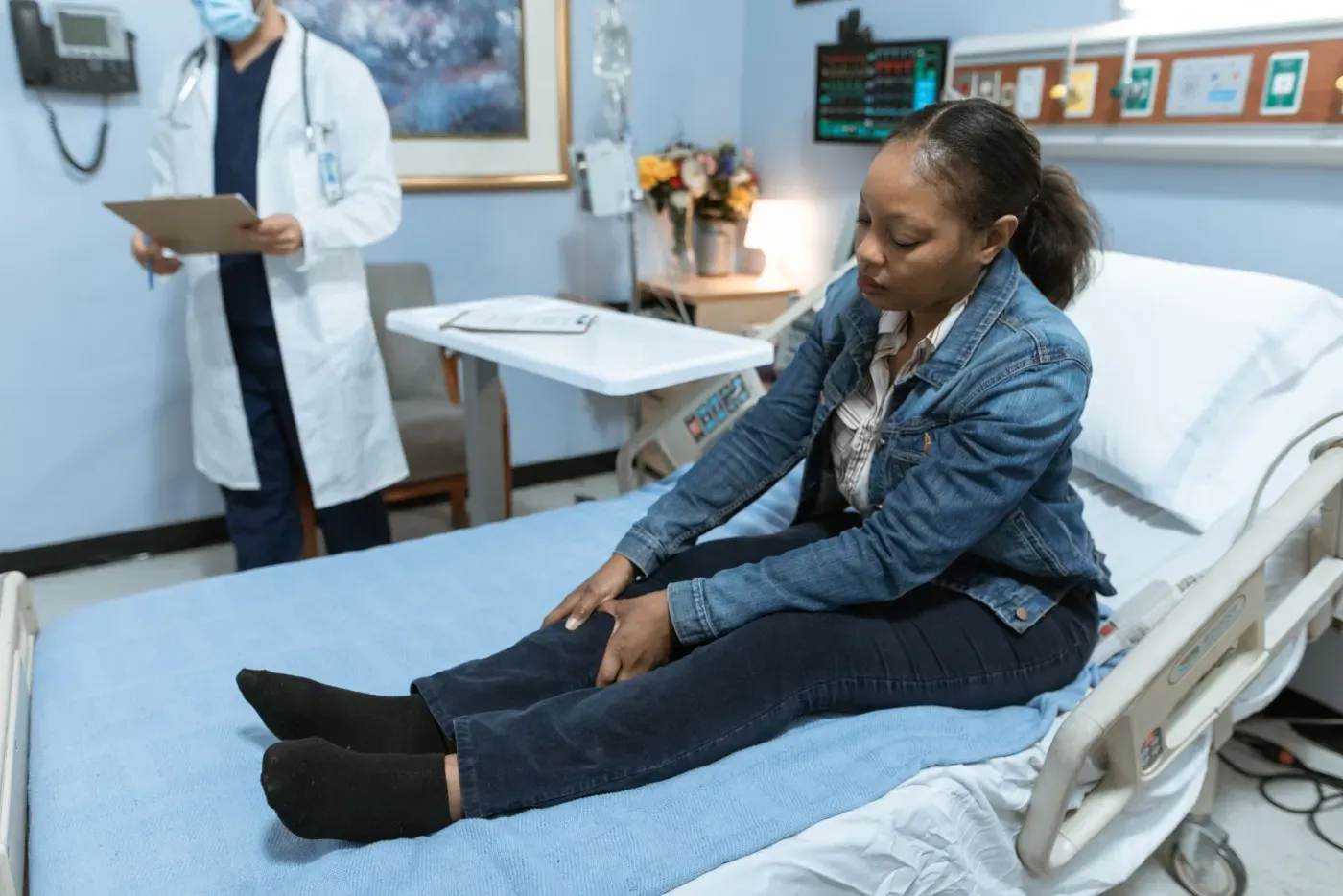
Sample article. This article has not been reviewed by a Livewell clinician yet.
The short answer
Knee pain on stairs most often comes from the joint behind the kneecap or from early wear in the knee (osteoarthritis). Both usually improve with the right strengthening programme. See a specialist if the pain lasts more than a few weeks, the knee swells, locks or gives way, or it stops you walking normally.
Stairs load the knee far more than walking on level ground. With every step up, the thigh muscle pulls the kneecap firmly against the thigh bone, so any irritation in that joint, or in the cartilage of the knee itself, tends to show up on stairs first.
The most common causes
- Pain behind the kneecap (patellofemoral pain). An ache at the front of the knee, worse on stairs, squatting, or after sitting for a long time. Common in active younger adults.
- Knee osteoarthritis. Gradual wear of the joint surface. Typically stiffness in the morning, pain that builds with activity, and sometimes swelling. More common after 50.
- Tendon irritation. Pain just below the kneecap, often in people who run, jump or have recently increased activity.
- Meniscus problems. Pain along the inside or outside of the knee, sometimes with catching or locking.
What you can do now
- Keep moving, but reduce the activities that clearly flare the pain for a week or two.
- Use the handrail and lead with the stronger leg going up, the sore leg going down.
- Gentle strengthening of the thigh and hip muscles is the single most effective long-term treatment for most knee pain.
- If you are overweight, even modest weight loss reduces the load through the knee on every step.
When to see a specialist
Book an assessment if the pain has lasted more than three or four weeks, keeps returning, or is affecting your work, sleep or walking. A specialist examination, and sometimes an X-ray, tells you which structure is causing the pain so treatment can be targeted rather than guessed.
Most people with knee pain do not need surgery. A clear diagnosis followed by a structured physiotherapy programme resolves or controls the majority of cases. Surgery is considered when the joint is badly damaged or a mechanical problem has not settled with good rehabilitation.
Get medical help urgently if
- You cannot put weight on the leg after a fall or injury
- The knee is hot, red and swollen and you feel feverish
- The knee looks out of shape after an injury
- The knee is locked and you cannot straighten it
Go to the nearest hospital emergency department. Do not wait for a clinic appointment.
This article is general information, not a diagnosis. For advice about your own symptoms, book a consultation with a specialist.